Embodied interactions through body tracking
Tag: embodiedinteractions
Cognition and Representation

Chapter 2 : Experiencing the World
- Experiential cognition is subconscious. It is something we learn and practice.
- In experiential cognition, the response is immediate and doesn’t require the analysis of an event (reflective cognition)
Chapter 4: Fitting the Artefact to the Person
- Surface and Internal artefacts
- Surface artefacts: what is seen is what exists
- Internal artefact: invisible to the users
- Internal artefactes needs interfaces to transform internal operation to representations readable for the user
- Surface representation must be understood by humans. Internal ones do not.
- Digital vs. Analog representations: the task determines the most suitable representation
Knowledge and information are invisible. They have no natural form. It is up to the conveyer of the information and knowledge to provide shape, substance, and organization
Norman. Things That Make Us Smart : Defending Human Attributes in the Age of the Machine, Diversion Books, 2014
Taking the computer ‘out of the box’
‘[…]there’s more to users than being information processing systems. The relation between information and knowledge is one example of how meaning is not inherent in information, but made meaningful trough direct participation in the world.’
Ehn and Linde (2004)
- Designing beyond the physical-digital divide
- Embodiement and embodied interactions
- ‘place’ reflects the emergence of practice as shared experience of people in space and over time
Hands Interaction
Interactive application of hand/gesture recognition for responsive simulation
Initial Studies
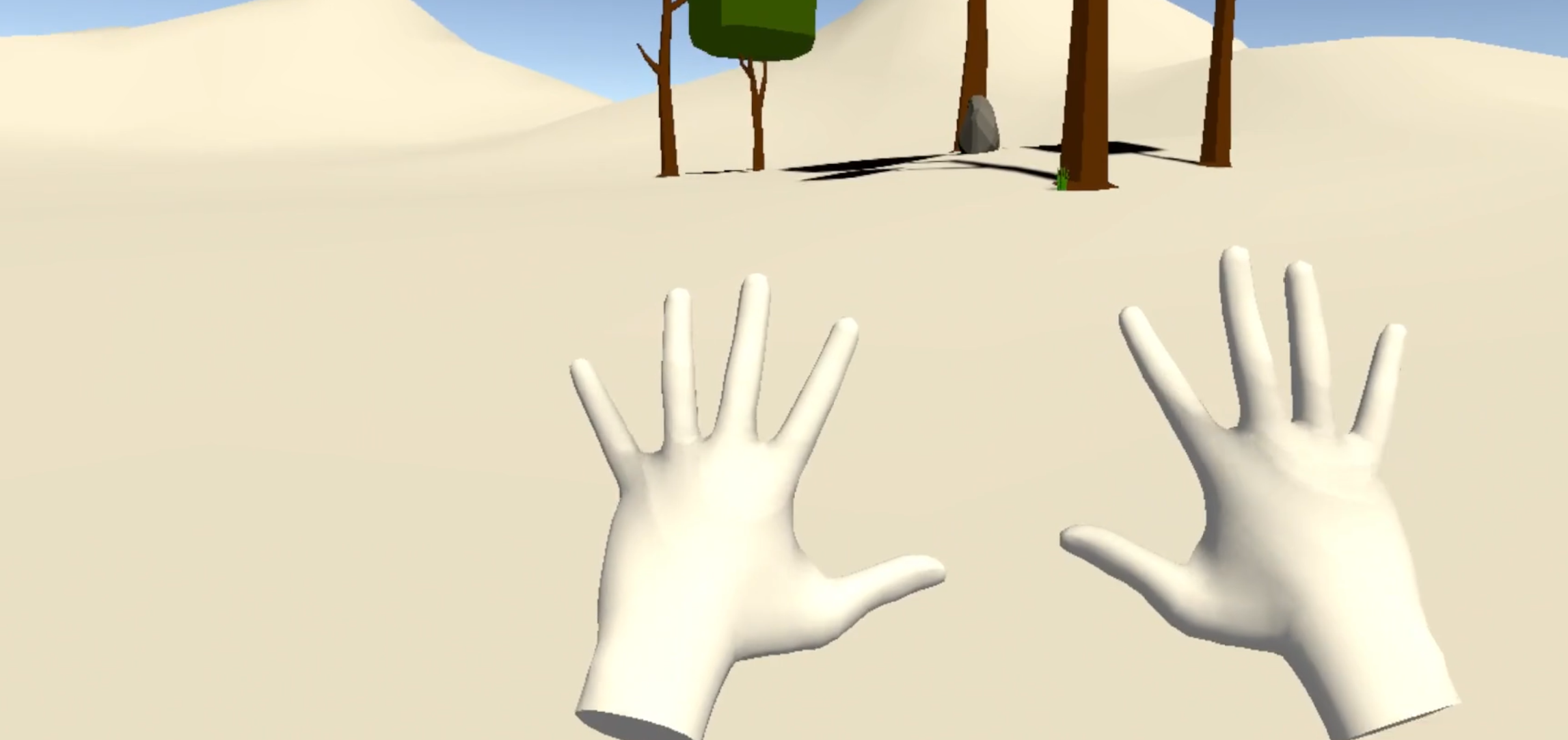
Initial studies on controller-free VR games for Oculus Quest 2 in Unity 3D. The aim is to increase the level of presence for the players and remove the limitations of the controllers in experiencing the video game.
 XR Design and Prototyping